Concerns about transparency, criteria and communication of PZKol
The start of the 2026 track cycling season has brought a wave of anxiety and controversy among men's middle-distance athletes. Unclear selection criteria, a lack of communication from the Polish Cycling Federation, and questionable personnel decisions have cast doubt on the transparency of the national team selection process.
Lack of clear communication from PZKol
In recent weeks, uncertainty and doubts have emerged in the track cycling community regarding the organization of the national team's work. To date, no official training plan for the 2026 season has been presented, nor have direct consultations with riders been held, indicating a lack of direct communication between the federation's leadership and the riders. Many riders, unaware of the federation's decision, continued to prepare for the season and the European Championships using their own funds or with the support of their clubs.
European Championship criteria announced just before the start
On January 14, 2026, the Polish Cycling Association (PZKol) published the qualification criteria for the European Championships in Konya, Turkey – just 17 days before the event. These criteria were not met by any athlete. At the same time, a provision was introduced allowing the selection of an athlete at the request of the national team coach, after approval by the Sports Director and the PZKol Board, which effectively paved the way for discretionary decisions.
Omission of top players
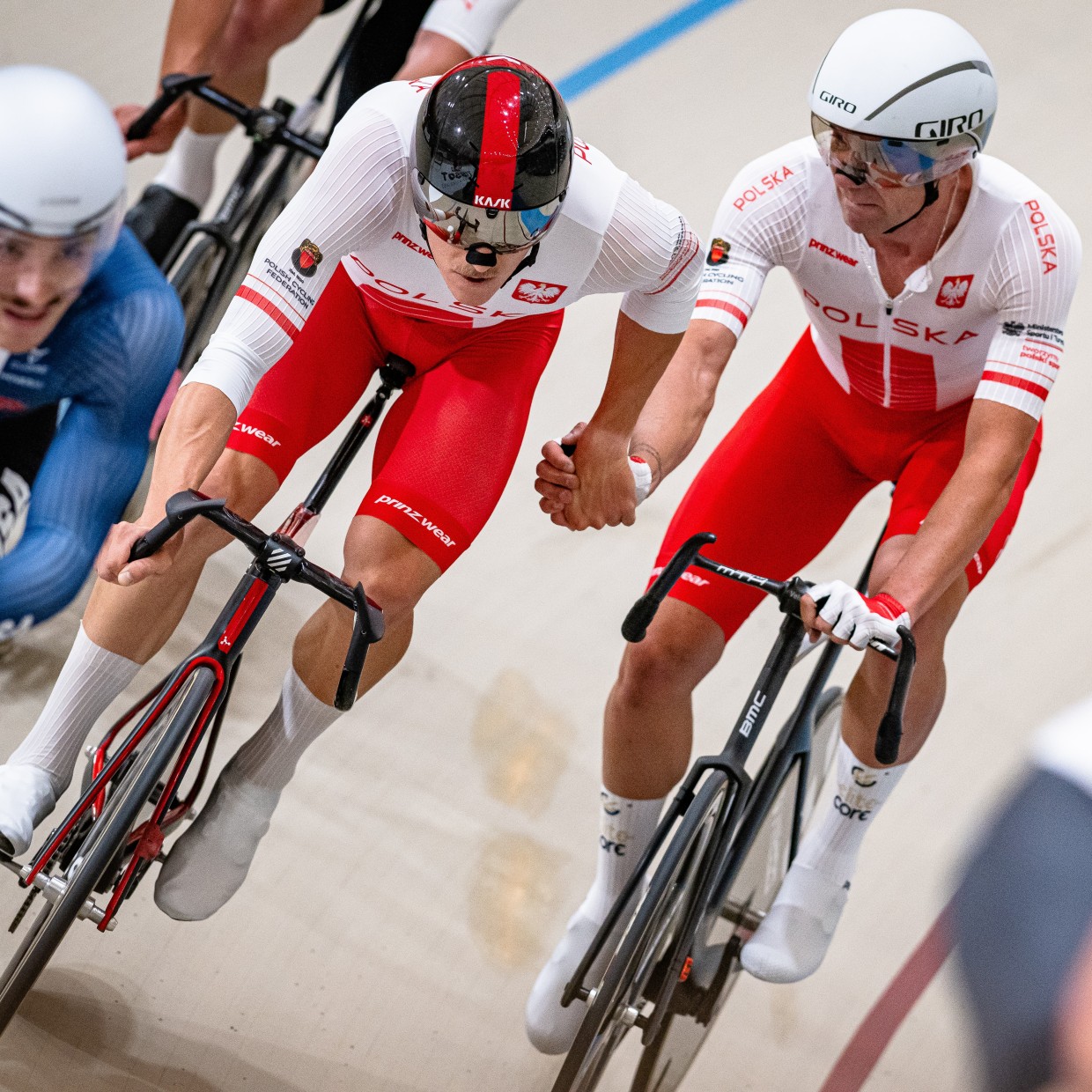
On January 22nd, the national team's roster for the European Championships was announced. Wojciech Pszczolarski, an experienced and decorated middle-distance rider, was absent from the squad. During the 2025 season, he regularly earned ranking points in UCI Track events, achieving top positions and placing third in the Polish Endurance rankings with 1,635 points. Despite this, he was not selected for either the European Championships or – according to unofficial information – for the national team for the 2026 season.
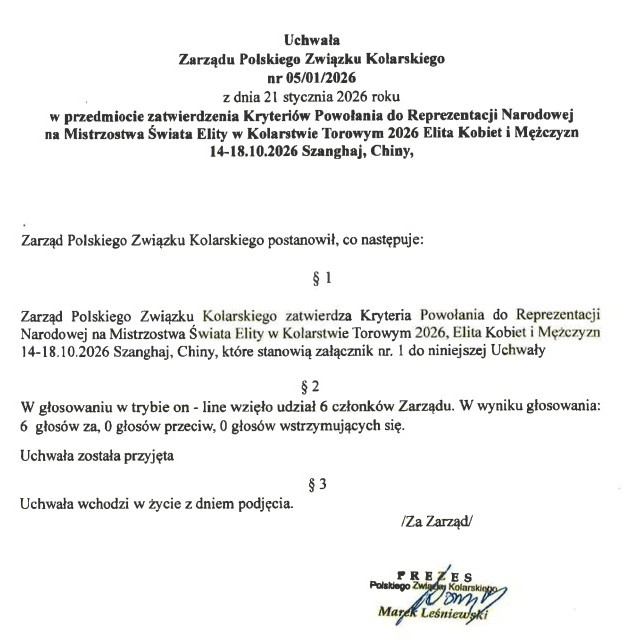
The 2026 National Team roster was also not posted on the PZKol website, contrary to the provisions of §3, section 1. 5 of the Regulations for the Call-up of Female and Male Athletes to the National Team of the Polish Cycling Federation, which were approved by Resolution No. 10/01/2026 of the Polish Cycling Federation Board of Directors dated January 24, 2026, regarding the approval of amendments to the Regulations for the Call-up of Female and Male Athletes to the National Team of the Polish Cycling Federation. Furthermore, as stated in §1, Section 2, Letter i) of the aforementioned Regulations, "Call-up to the National Team" shall be understood as an official document of the Polish Cycling Federation (based on a resolution of the Board) published on the website www.pzkol.pl. Currently, there is no trace of the resolution of the Polish Cycling Federation Board regarding the call-up of female and male athletes to the National Team for 2026 on the PZKol website.
The athlete was not informed of the decisions directly – no one from the PZKol contacted him either by phone or email. Like all other interested parties, he learned about the national team's European Championship lineup only from a press release published on the Polish Cycling Association (PZKol) website. He was not provided with any formal criteria to justify the decision.
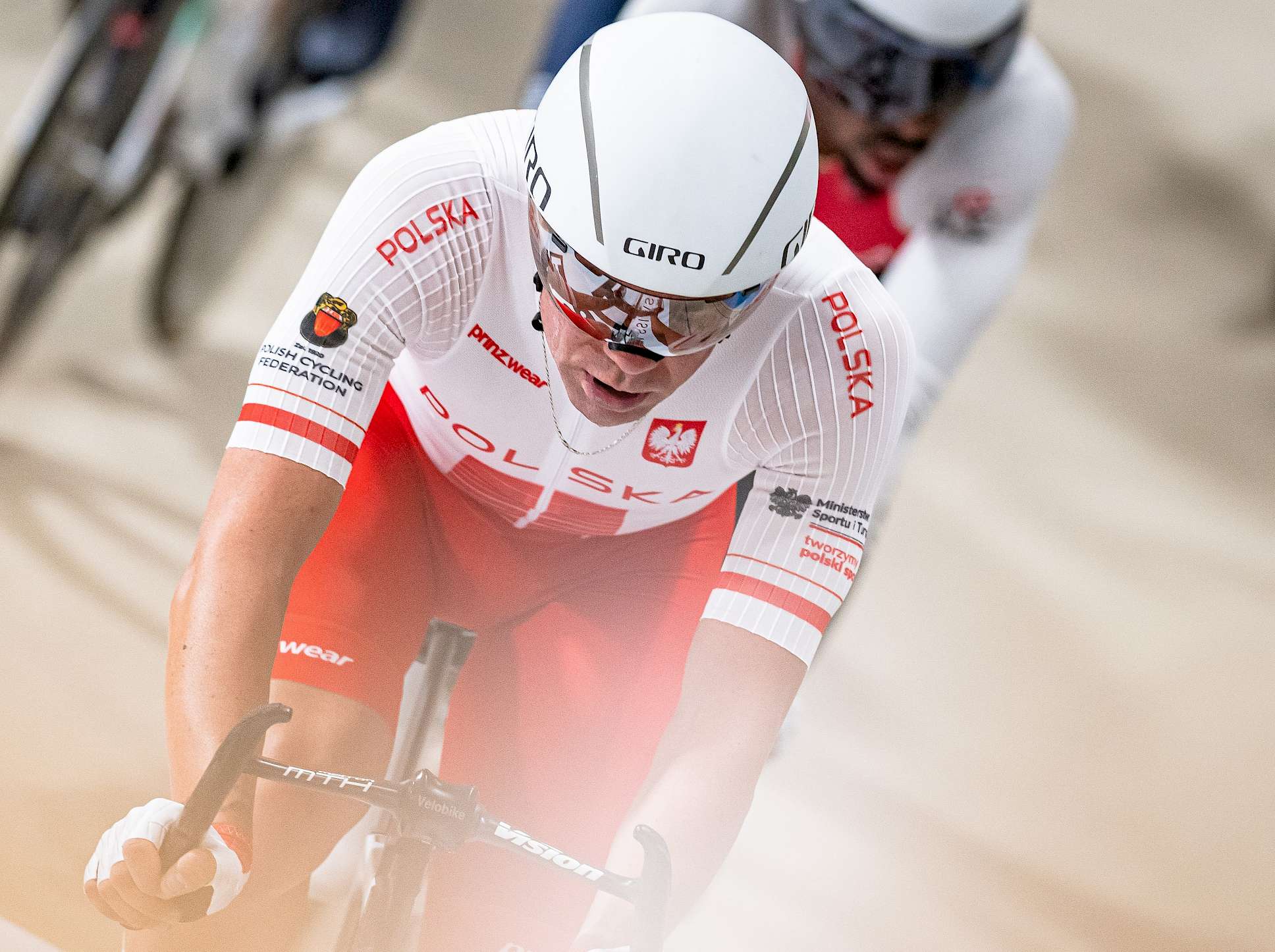 Wojciech Pszczolarski
New criteria for 2026 – further doubts
On January 28, 2026, the official criteria for national team selection for the 2026 season were published. This document revealed another controversy:
Elite men's results in UCI CL1 and CL2 races were not included as a basis for qualification.
Meanwhile:
- In the elite women's criteria, UCI CL1 races are a standard element of the evaluation process.
- The criteria for U23 riders (both women and men) also include UCI CL1 races.
- Only elite men were excluded from this qualification path.
In practice, this means that riders who regularly represent Poland and their teams in international UCI competitions earn points and valuable experience, which are not then considered for selection to the national team.
Consequently, this limits their ability to compete in the most important events of the season, such as the World Championships or European Championships.
It is worth noting here that the criteria allow for the possibility of calling up a player "upon a justified request of the national team coach, after approval by the Training Department", which, in the absence of clear and public selection rules, opens the door to subjective decisions.
The voice of the environment
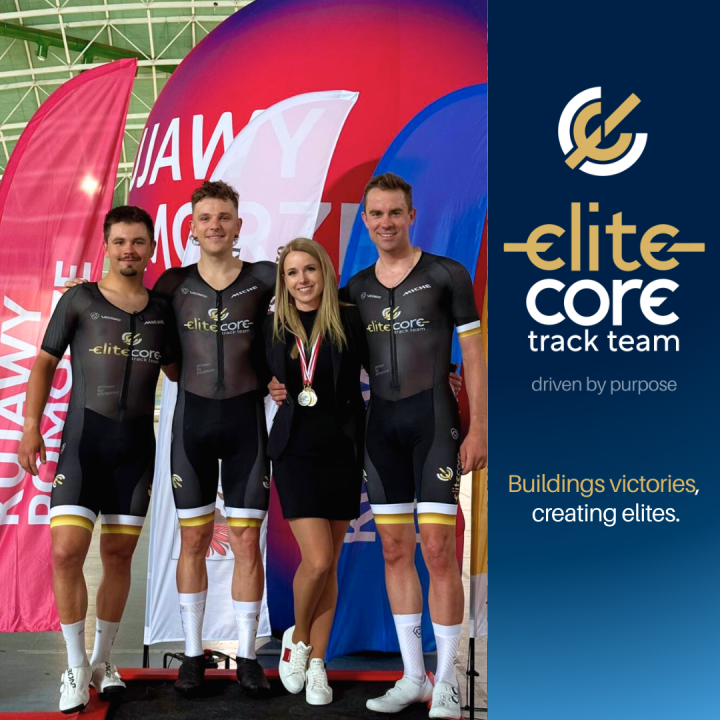
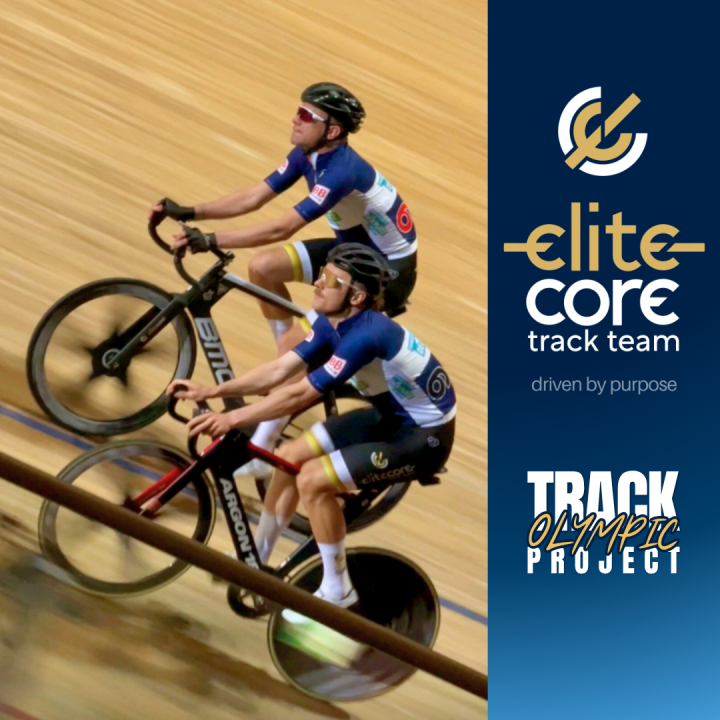
Wojciech Pszczolarski, from BrzeLLany, is currently a member of EliteCore Track Team – a team from WrocL?aw competing with a UCI Track Team license, which has successfully passed the approval process by the Polish Cycling Federation, required for UCI registration. This represents a significant source of prestige for Polish track cycling.
The club supports the athlete and emphasizes that the competition isn't about one individual, but about principles that should be transparent, equal, and based on objective athletic performance.
The lack of communication, unclear selection criteria, and discrepancies between registrations and decisions raise serious questions about the transparency of the national team selection process for the 2026 season and are causing growing concern in the cycling community.
The lack of a national team selection effectively blocks many athletes from developing their athletic skills, accessing the training system, and representing Poland at championship events. This also undermines months of investment by clubs that finance their participation in international competitions from their own funds.
The uncertainty of tomorrow – when the place in the team is no longer decided only by results
This entire situation raises much more serious questions than just individual call-ups. It demonstrates how fragile and uncertain an athlete's position in the national team's training system can be. Today, you might be a European Championship medalist, earning points for Olympic qualifications, and fulfilling a multi-year sports plan, and tomorrow—without discussion, without explanation, and without clear criteria—you might be removed from the team.
This model of operation not only weakens athletes' trust in the institution but also undermines the purpose of long-term training and demotivates those who dedicate their entire lives to sport. When representing their country ceases to be a clear consequence of work and results, and the decision-making process becomes opaque, not only are the careers of individual athletes threatened but also the future of the entire sport.
Such situations have a long-term impact on the psyche, motivation, and career decisions. Many athletes then begin to question whether continued involvement is even justified. This is a problem that many athletes operating in similar circumstances today identify with.
We also invite you to follow us on social media:
Instagram:
https://www.instagram.com/elitecore_trackteam/
https://www.instagram.com/elitecore.agency/
Facebook:
https://www.facebook.com/elitecore.trackteam/
https://www.facebook.com/elitecore.agency/
Written by: Dzmitry Prudnikau
Edited by: L?ukasz Machowczyk